If your vehicle or equipment needs to enter an Abu Dhabi oilfield, gas facility, drilling site, or other hazardous operating area, Zone 2 preparation should not be treated as a last-minute task. A missing document, unsuitable component, exposed ignition source, or unclear site requirement can delay access, slow down mobilization, and create unnecessary back-and-forth with safety teams.
This Zone 2 vehicle conversion checklist is written for contractors, fleet managers, procurement teams, maintenance supervisors, and oilfield service providers who need a practical way to prepare before requesting Zone 2 conversion support in Abu Dhabi. It explains what details to collect, what systems may be reviewed, what documentation usually matters, and what information helps a service provider assess the vehicle faster.
The goal is simple: help you prepare the right information before your vehicle or equipment is modified, inspected, documented, or submitted for site access review.
Key Takeaways
A Zone 2 vehicle conversion checklist helps contractors prepare vehicles or equipment for hazardous-area site access by reviewing ignition-source control, electrical safety, exhaust spark prevention, gas detection or shutdown requirements, anti-static measures, documentation, and inspection readiness.
For ADNOC-related site access in Abu Dhabi, the most important preparation step is to understand the specific site requirements before starting the conversion. Zone 2 requirements can vary by vehicle type, site operator, work location, equipment use, and the documents requested by the project or safety team.
Before contacting a Zone 2 conversion provider, prepare the vehicle type, make, and model, fuel type, engine details, intended site or project, required deadline, photos, previous modification history, and any written site-access or HSE requirements you received. This makes the assessment faster and reduces the chance of missing a critical requirement.
Zone 2 conversion should be handled as a safety and compliance process, not just a parts installation job. The final setup should support hazardous-area operation by reducing ignition risks and helping the vehicle meet the applicable site review, documentation, and inspection expectations.
What Is Zone 2 Vehicle Conversion?
Zone 2 vehicle conversion is the process of modifying or preparing a vehicle, machine, or mobile equipment unit so it can be considered for use in a Zone 2 hazardous area. In simple terms, Zone 2 is an area where an explosive gas, vapor, or mist atmosphere is not expected during normal operation but could occur for a short period under abnormal conditions.
In simple terms, Zone 2 is an area where an explosive gas, vapor, or mist atmosphere is not expected during normal operation but could occur for a short period under abnormal conditions. For broader background, the UK Health and Safety Executive explains how explosive-atmosphere areas are classified into zones based on the likelihood and duration of the hazard.
For oil and gas work in Abu Dhabi, this matters because ordinary vehicles can create ignition risks. A hot exhaust, electrical spark, exposed wiring issue, static discharge, unsuitable component, or uncontrolled engine operation may become dangerous in the wrong atmosphere. Zone 2 preparation focuses on reducing those risks through suitable safety systems, component selection, installation practices, and documentation.
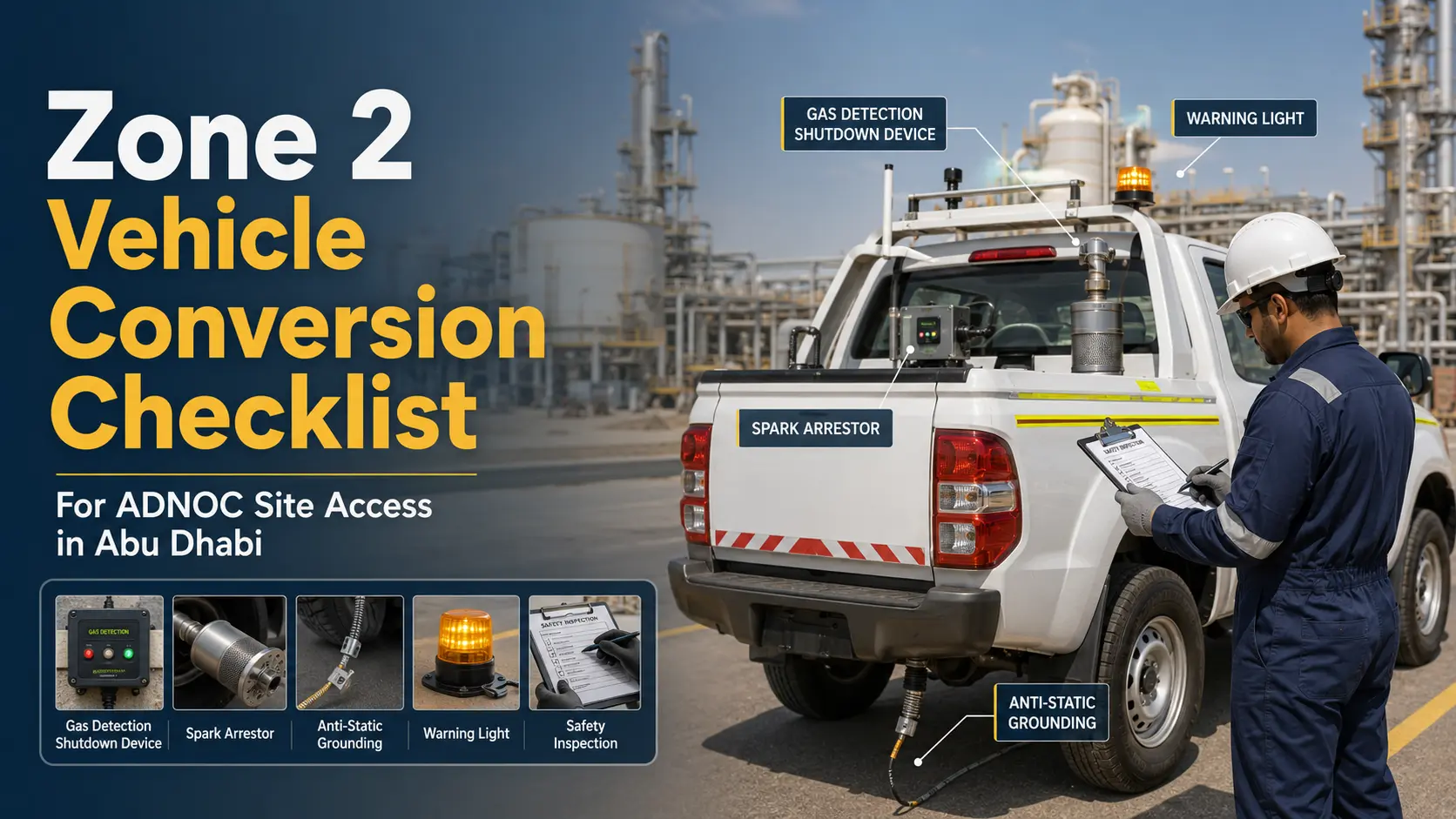
Depending on the vehicle and the site requirement, Zone 2 conversion may involve exhaust spark prevention, gas detection and shutdown systems, anti-static measures, electrical safety changes, emergency shutdown features, warning systems, compliant components, and inspection-ready documentation.
A good Zone 2 vehicle conversion checklist does not replace a professional inspection or site-specific requirement. It helps you prepare the information and vehicle condition needed before the technical assessment begins.
Why ADNOC Site Access Requires Careful Vehicle Preparation
ADNOC-related oilfield and industrial sites operate in environments where safety expectations are strict. Contractors are often required to show that vehicles and equipment entering hazardous or controlled areas are properly prepared for the work location. That preparation may include mechanical, electrical, and documentation checks before the vehicle is accepted for site entry.
The challenge is that many delays happen before the technical work even begins. The contractor may not know which requirement applies. The vehicle may arrive without photos or details. The project team may only say “Zone 2 required” without explaining whether the site expects gas detection shutdown, spark arrestor installation, anti-static measures, or specific documentation.
That is why a checklist is useful. It helps you organize the request before you call a workshop or Zone 2 service provider. Instead of asking, “Can you do Zone 2?”, you can send the vehicle details, use case, project requirement, and deadline. That makes the first assessment more accurate and helps avoid wasted time.
Zone 2 Vehicle Conversion Checklist Before You Request a Quote
Use this checklist before sending a vehicle, pickup, truck, machine, generator, compressor, or mobile equipment unit for Zone 2 assessment in Abu Dhabi.
1. Confirm the Vehicle or Equipment Details
Start with the basics. A Zone 2 provider needs to know what they are assessing before they can recommend the right approach.
- Vehicle or equipment type
- Make, model, and year
- Fuel type, such as diesel or petrol
- Engine size or engine model, if available
- Manual or automatic transmission
- Current condition and whether the unit is operational
- Existing safety modifications, if any
- Whether the unit is road-going, site-only, or trailer-mounted
This information helps the provider understand the physical layout, possible ignition sources, engine configuration, exhaust arrangement, electrical systems, and installation space.
2. Get the Site Requirement in Writing If Possible
One of the most useful things you can do is ask the project, client, or site safety team for written instructions. “Zone 2 required” is often not enough detail. A written requirement may mention the specific systems, inspection points, documentation format, or standards expected for access.
Try to collect:
- Site or project name
- Operating area or zone classification
- Vehicle category allowed on site
- Required safety systems
- Required documents or certificates
- Inspection process or submission steps
- Deadline for mobilization
- Contact person for clarification
If you do not have a written requirement, explain the intended site use as clearly as possible. A vehicle used for routine transport may be assessed differently from a unit carrying tools, compressors, fuel, electrical equipment, or oilfield service systems.
3. Check for Ignition Sources
The main purpose of Zone 2 preparation is to reduce ignition risk in a hazardous environment. Before conversion, review the vehicle for obvious ignition sources or uncontrolled heat points.
- Hot exhaust surfaces
- Unprotected exhaust outlet
- Damaged wiring or loose electrical connections
- Aftermarket electrical accessories
- Non-compliant lights, switches, or alarms
- Battery exposure or loose battery terminals
- Static discharge risks
- Engine components that may need shutdown control
This is not a substitute for technical inspection, but it helps you identify problems early. Vehicles that arrive with poor wiring, damaged electrical accessories, or unknown modifications often need extra time before Zone 2 work can proceed.
4. Review Exhaust Spark Prevention Requirements
Spark prevention is one of the common concerns for vehicles entering oil and gas hazardous areas. Depending on the vehicle and site requirements, the exhaust system may need a suitable spark arrestor or related exhaust safety arrangement.
Before requesting a quote, take clear photos of the exhaust layout, tailpipe position, engine bay, underbody area, and any existing exhaust modification. These photos help the workshop understand the installation space and whether the current exhaust condition may cause delays.
5. Check Gas Detection and Shutdown Requirements
Some Zone 2 vehicle setups may require a gas detection and shutdown system. The purpose is to help shut down the engine or electrical function when gas is detected at a defined level, depending on the system and site requirements.
Before conversion, ask whether the site expects gas detection, automatic shutdown, manual shutdown, alarm indication, or a specific type of sensor placement. This is especially important for vehicles working near processing areas, well sites, drilling operations, loading areas, or other controlled zones.
6. Review Anti-Static and Earthing Needs
Static electricity can become a safety issue in hazardous areas. Depending on the site and vehicle use, anti-static belts, bonding, grounding, or related static-control measures may be requested.
Before the assessment, tell the provider how the vehicle will be used. Will it remain parked during work? Will it carry tools or equipment? Will it be near fuel, gas, chemical, or production areas? Will people load and unload materials frequently? These use-case details help determine what anti-static preparation may be relevant.
7. Inspect Electrical Systems and Accessories
Electrical systems are often where hidden problems appear. Many vehicles have aftermarket lights, reverse alarms, GPS systems, radios, chargers, tool power connections, or other added accessories. If these are not suitable for the intended area, they may need review, removal, protection, or replacement.
Before conversion, list any added accessories and take photos of the dashboard, battery, fuse box, exterior lights, wiring additions, and mounted equipment. Do not assume that an accessory is acceptable simply because it works normally on the road. Hazardous-area use is a different safety context.
8. Prepare Documentation Before the Vehicle Arrives
Documentation is often as important as the physical modification. A vehicle may be technically improved but still delayed if the required paperwork is missing or unclear.
Prepare these items before contacting the provider:
- Vehicle registration or identifying details
- Photos of the vehicle and equipment
- Site requirement or client instruction
- Previous certificates or inspection records, if available
- List of existing modifications
- Maintenance history, if relevant
- Deadline for inspection, mobilization, or site entry
- Company contact person for technical questions
The provider may request additional documents depending on the exact job, but this starting set will make the first conversation more productive.
9. Check Vehicle Condition Before Conversion
Zone 2 conversion work is easier when the vehicle is in good operating condition. If the vehicle has engine issues, electrical faults, damaged wiring, leaking fluids, poor battery condition, or exhaust damage, those problems may need to be resolved first.
Before sending the vehicle, check:
- The engine starts and runs normally
- No obvious fuel, oil, or coolant leaks
- Battery terminals are secure
- Wiring is not damaged or hanging loose
- The exhaust system is not broken or leaking
- Lights and basic controls work
- No unsafe aftermarket modifications are present
- The vehicle is clean enough for inspection and installation work
A clean, functional vehicle usually moves through assessment and installation faster than one that needs general repair work first.
Common Vehicles and Equipment That May Need Zone 2 Preparation
Zone 2 preparation may apply to different types of vehicles and mobile equipment used around Abu Dhabi oilfield and industrial sites. The exact requirement depends on the site, operator, and intended use.
- Pickup trucks used by contractors and supervisors
- Service trucks and maintenance vehicles
- Workshop or utility vehicles
- Mobile compressors and generators
- Material transport vehicles
- Oilfield support vehicles
- Wireline, slickline, or field service support units
- Heavy equipment is working near controlled areas
- Trailer-mounted equipment used in oil and gas operations
Not every vehicle needs the same setup. A pickup used for site visits may have different requirements from a mobile equipment unit that operates near active production or drilling areas. That is why the vehicle use case should always be explained before the quote.
Common Mistakes That Delay Zone 2 Approval or Site Access
Many Zone 2 delays are avoidable. The most common issue is not the conversion itself; it is poor preparation before the vehicle reaches the workshop.
Mistake 1: Asking for Zone 2 Without a Site Requirement
If the site requirement is unclear, the provider has to guess what the final inspection or client review may expect. This can lead to missing components, extra revisions, or repeated inspections.
Mistake 2: Sending Incomplete Vehicle Details
A quote based only on “pickup required for Zone 2” is not enough. The make, model, fuel type, year, current condition, and use case all matter.
Mistake 3: Ignoring Aftermarket Electrical Additions
Extra lights, radios, chargers, alarms, cameras, or tracking systems may affect the review. These should be disclosed early instead of being discovered during installation.
Mistake 4: Waiting Until the Mobilization Deadline
Zone 2 conversion can require assessment, parts, installation, inspection, documentation, and possible corrections. Waiting until the day before site access creates avoidable pressure.
Mistake 5: Assuming Certification Is Automatic
A professional provider can support modification, installation, documentation, and inspection readiness, but final acceptance may depend on the site, inspection process, and the exact requirement. Avoid any provider that promises guaranteed approval without reviewing the vehicle and the requirements first.
What to Send to KhoCAR for a Faster Zone 2 Assessment
To speed up the first review, send KhoCAR a complete request instead of a one-line message. This helps the team understand the vehicle, site, urgency, and likely scope before advising the next step.
For a faster Zone 2 vehicle conversion assessment, send:
- Vehicle or equipment type
- Make, model, and year
- Fuel type and engine detail,s if available
- Photos of the vehicle exterior, engine bay, battery area, exhaust, dashboard, and any mounted equipment
- Site or project requirement
- Whether ADNOC site access or other oilfield access is involved
- Required deadline
- Current location of the vehicle
- Any previous Zone 2, ATEX, IECEx, or safety-related documentation
- Main contact person for technical coordination
This information allows the team to respond with a more useful first assessment and reduce unnecessary back-and-forth.
Need Zone 2 Vehicle Conversion Support in Abu Dhabi?
If your vehicle or equipment needs Zone 2 preparation for ADNOC-related site access, KhoCAR can help you review the requirement, understand the likely conversion scope, and prepare the vehicle for hazardous-area use according to the applicable project and safety expectations.
For more details, visit KhoCAR’s related service page: Zone 2 Installation & Certification Abu Dhabi.
Ready to request an assessment? Contact KhoCAR and send your vehicle type, photos, site requirements, and deadline so the team can guide you on the next step.
FAQs
What is a Zone 2 vehicle conversion checklist?
A Zone 2 vehicle conversion checklist is a preparation guide used before modifying or assessing a vehicle for hazardous-area site access. It usually covers vehicle details, ignition-source controls, spark prevention, gas detection or shutdown needs, anti-static measures, electrical accessories, documentation, photos, and inspection readiness.
What does Zone 2 mean for vehicles in Abu Dhabi oilfield sites?
Zone 2 generally refers to an area where an explosive gas, vapor, or mist atmosphere is not expected during normal operation but could occur briefly under abnormal conditions. Vehicles entering these areas may need safety preparation to reduce ignition risk and support the site’s access requirements.
What information should I send before requesting Zone 2 conversion?
Send the vehicle type, make, model, year, fuel type, engine details if available, photos, current condition, site requirement, deadline, and any previous inspection or safety documentation. If ADNOC site access is involved, include any written instruction from the project or safety team.
Does every vehicle need the same Zone 2 conversion?
No. Zone 2 conversion requirements can vary by vehicle type, equipment use, operating area, fuel type, site rule, and inspection process. A pickup truck, service vehicle, generator, compressor, or oilfield support unit may each require a different assessment.
Can a vehicle be approved for ADNOC site access after Zone 2 conversion?
Zone 2 conversion can help prepare a vehicle for hazardous-area access, but final acceptance may depend on the site requirement, inspection process, documentation, and project-specific review. It is better to confirm the required scope before starting work instead of assuming approval is automatic.
How long does Zone 2 vehicle conversion take?
The timeline depends on the vehicle type, existing condition, required components, documentation, inspection needs, and parts availability. A vehicle with clear requirements and complete information is usually easier to assess and schedule than one with missing details or unknown modifications.
What are common Zone 2 vehicle safety components?
Common Zone 2-related vehicle safety items may include exhaust spark prevention, gas detection and shutdown systems, anti-static measures, emergency shutdown features, warning indicators, and suitable electrical or mechanical components. The exact setup depends on the site requirement and vehicle use.
Who should use this checklist?
This checklist is useful for contractors, fleet managers, procurement teams, oilfield service companies, maintenance teams, and supervisors preparing vehicles or equipment for hazardous-area access in Abu Dhabi or other UAE oil and gas environments.